

Drawer Locks vs. Cabinet Locks: Key Differences Every Buyer Should Know
Oct 22, 2026
Leave a message
Drawer Locks vs. Cabinet Locks: Key Differences Every Buyer Should Know
|
Meta Title |
Drawer Locks vs. Cabinet Locks: Differences, Uses & How to Choose |
|
Meta Description |
Drawer locks and cabinet locks look similar but work differently. Learn the key differences in mounting, panel thickness, security, and applications before you buy. |
|
Focus Keyword |
drawer locks vs cabinet locks |
|
Secondary Keywords |
drawer lock, cabinet lock, furniture lock difference, central locking drawer, filing cabinet lock |
Introduction
Buyers often use "drawer lock" and "cabinet lock" as if they were the same product. In practice they are engineered for different jobs, and mixing them up leads to installation problems, warranty claims, and disappointed customers.
This article explains the real differences between drawer locks and cabinet locks, and gives you a simple framework for choosing the right one.
The Core Difference: How the Panel Moves
The fundamental difference is the motion of the panel being locked:
• A cabinet door swings on hinges. The lock only needs to stop the door from swinging open.
• A drawer slides in and out. The lock needs to stop the drawer from being pulled forward.
That difference drives almost everything else: the mounting position, the type of bolt or cam, and the amount of force the lock must resist.
Cabinet Locks
Cabinet locks are usually cam locks or cylinder locks mounted through the door face or the door edge.
Typical features:
• Cam swings behind the frame to block the door.
• Barrel length matched to the door thickness.
• Often mounted near the opening edge of the door.
• Available for glass doors with clamp-on designs.
Common applications: cupboards, wardrobes, lockers, display cabinets, and storage units.
Drawer Locks
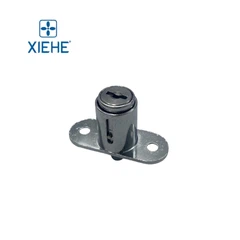
Drawer locks are designed for the narrow front panel of a drawer. They are usually mounted through the drawer front and use a hook, catch, or bolt that engages the cabinet frame.
Typical features:
• Shorter body to fit a thin drawer front.
• Mechanism that grips or hooks the frame rather than swinging a large cam.
• Often supplied with a central-locking bar for multi-drawer units.
Common applications: office desks, filing cabinets, pedestals, and tool chests.
Central Locking: A Drawer-Specific Feature
One of the biggest practical differences is central locking. In a multi-drawer cabinet, a single lock can drive a vertical bar that locks every drawer at once. This is standard in office filing cabinets and is difficult to achieve with a simple cabinet door lock.
If a customer wants "one key for the whole unit," central-locking drawer systems are usually the answer.
Side-by-Side Comparison
|
Feature |
Cabinet Lock |
Drawer Lock |
|
Panel motion |
Swings |
Slides |
|
Typical mechanism |
Cam or cylinder |
Hook, catch, or bolt |
|
Body length |
Medium to long |
Short |
|
Multi-point locking |
Rare |
Common (central locking) |
|
Mounting |
Door face or edge |
Drawer front |
|
Best for |
Doors, cupboards |
Drawers, filing units |
Security Considerations
• Cabinet locks concentrate load on the door edge and frame. A weak frame or thin panel fails before the lock does.
• Drawer locks must resist forward pulling force. Look for reinforced hooks and steel (not plastic) engagement points.
• Neither type is high security by default. If theft resistance is important, specify a lock with anti-pick, anti-drill, and hardened components.
How to Choose
Ask these questions:
1. Does the panel swing or slide? This immediately tells you which family of lock to use.
2. How thick is the panel? Drawer fronts are thinner than cabinet doors, so the body length differs.
3. Do you need one key for multiple drawers? Choose a central-locking drawer lock.
4. Is the surface glass or wood? Glass needs a clamp-on lock; wood can be drilled.
5. How much security is required? Match the lock rating to the risk.
Common Mistakes to Avoid
• Using a cabinet cam lock on a drawer - the cam will not engage the frame correctly.
• Ignoring panel thickness - a barrel that is too short will not clamp; too long will not sit flush.
• Forgetting the key system - order keyed alike or master keyed at the start, not after installation.
• Skipping the finish check - indoor and outdoor applications need different corrosion protection.
Conclusion
The difference between drawer locks and cabinet locks comes down to panel motion. Doors swing, so cabinet locks use a cam or cylinder to block the swing. Drawers slide, so drawer locks use a hook or bolt to resist pulling - and often support central locking across a whole unit.
Match the lock to the motion of the panel and the thickness of the material, and you will get a reliable, professional result every time.
Send Inquiry