

Working Principle Of Glass Door Locks
Nov 20, 2024
Leave a message
Magnetic locks (or electromagnetic locks) utilize the principle of electromagnetism. When current passes through a silicon steel sheet, it generates a strong attraction, tightly holding the metal plate to achieve the locking effect. Once the access control system controlling the electromagnetic lock's power supply correctly identifies the lock, it cuts off the power, and the electromagnetic lock loses its attraction, allowing the door to open. Magnetic locks do not have complex mechanical structures or bolt mechanisms.
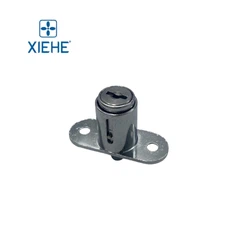
Mechanical locks, such as those from Yuema Locks, mainly consist of a lock cylinder, springs, and side pins. The locking principle is achieved by side pin bolts on both sides. Under the action of the spring springs, the side pin bolts are pushed between the outer and outer shells, locking the lock cylinder and outer shell. When the correct key is inserted, aligning all the notches of the springs, the side pin bolts move inward simultaneously under the action of the internal pressure springs, entering the spring notches, allowing the lock cylinder to rotate and unlock.
Some glass door locks have built-in springs that automatically press the door hook downwards, allowing the door to close automatically and remain tightly closed without external force.
Send Inquiry